Building Enterprise Value: What I've Learned About Scaling Companies, Leadership, and Capital
Lessons from building and scaling companies across consumer services, investment advisory, and venture capital over several decades.
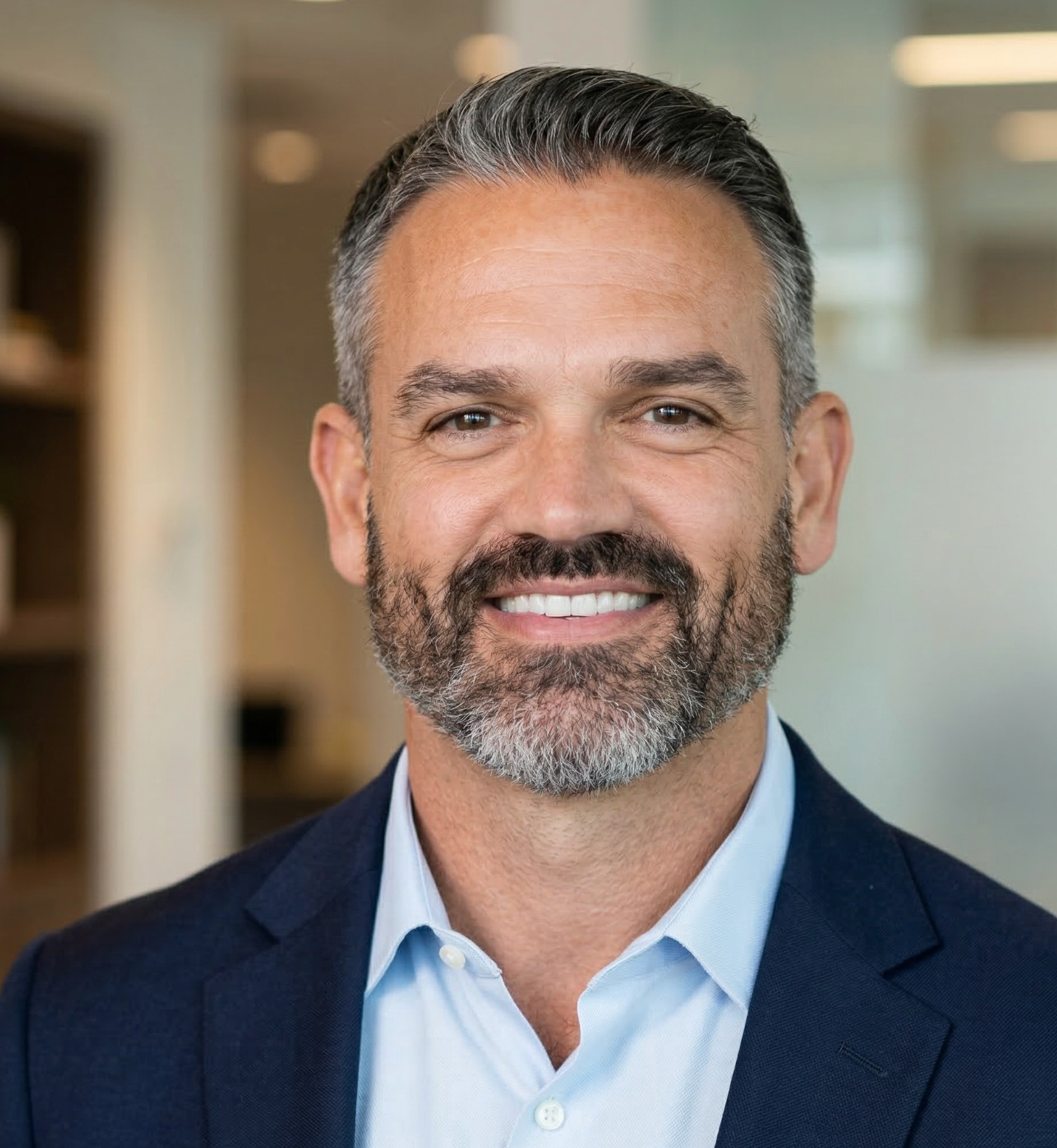
Vince Covino
Founder & Managing Partner, VC Strategic Capital
The Pattern That Repeats
Over the past several decades, I've had the opportunity to build and scale companies across consumer services, investment advisory markets, and venture capital.
Across those experiences, one pattern became increasingly clear:
Most businesses don't struggle because of a lack of opportunity. They struggle because complexity eventually outpaces clarity.
Businesses don't hit ceilings; individuals do. As organizations grow, execution becomes harder. Decision-making slows. Leadership alignment weakens. Operational inefficiencies compound. What worked at one stage of growth often fails at the next.
What Scale Actually Teaches
Early in my career, I was deeply involved in building and scaling consumer-facing businesses. One of those companies, SeaQuest, grew to serve over 20 million visitors. Scaling a business at that level teaches you quickly that growth magnifies everything — strengths, weaknesses, leadership gaps, operational inefficiencies, and cultural issues.
At smaller stages, founders can often compensate through energy and direct involvement. At scale, systems become mandatory.
What worked when a company was small no longer works when you are managing teams of hundreds of employees, significant revenue, operational complexity, retention systems, executive leadership layers, and simultaneous investor growth and expansion pressures.
That experience fundamentally changed how I think about business.
Structural Problems, Not Marketing Problems
I began realizing that most scaling problems are not actually marketing problems. They are structural problems.
Companies plateau because of unclear priorities, leadership bottlenecks, fragmented communication, lack of accountability, operational inefficiency, weak systems, poor capital allocation, and strategic drift.
The plateau is in the capacity of the leader. Founders spend years trying to optimize tactics, while avoiding the harder work of organizational clarity and leadership alignment.
The businesses that scale sustainably are not doing more things. They are doing fewer things with greater consistency, clarity, and execution discipline.
What the Exits Confirmed
Over the years, I've built and exited multiple businesses across different industries, including seven and eight-figure exits. While industries varied, the underlying principles rarely changed.
Execution mattered more than ideas. Leadership mattered more than strategy decks. Operational clarity mattered more than motivational energy.
Legacy Wealth was one of the companies that reinforced this perspective for me. Building that business further strengthened my understanding that scalable growth requires more than vision. It requires systems, positioning, operational discipline, customer psychology, and the ability to simplify complexity inside an organization.
The companies that endure are built on disciplined execution, strategic focus, strong leadership, organizational alignment, financial discipline, adaptability, culture, and long-term thinking.
Enterprise Value as the Lens
At VCSC, we are fundamentally focused on one thing: increasing enterprise value by creating immense value for others.
Not vanity metrics. Not superficial growth optics. Enterprise value.
That's the lens through which we evaluate businesses and strategic decisions.
Instead of asking 'How do we grow faster?' the more important question is: 'What decisions most increase the long-term value and durability of this business?'
Sometimes the answer is aggressive expansion. Sometimes it is narrowing focus. Sometimes it is rebuilding leadership structure. Sometimes it is improving operational cadence before pursuing growth capital.
Capital Amplifies What Already Exists
One of the biggest misconceptions I see among founders is the belief that capital fixes broken systems.
In reality, capital always amplifies existing conditions.
If a company lacks operational clarity, additional capital accelerates inefficiency, which hurts all stakeholders. If leadership is fragmented, more growth simply creates more chaos. If acquisition economics are weak, more spending compounds the problem.
Strong companies use capital as leverage. Weak companies use capital as temporary relief.
Leadership Maturity as a Scaling Constraint
Most businesses do not stall because opportunity disappears. They stall because leadership complexity eventually exceeds organizational capability.
Decision-making slows. Accountability weakens. Communication fragments. Founders become bottlenecks.
Organizational alignment is one of the most undervalued growth levers in business.
The founder who creates a company is not automatically equipped to lead the next stage of growth without intentional evolution.
As I transitioned more deeply into strategic advisory and capital markets work, I noticed the same patterns repeating across industries. The industry changed. The underlying problems rarely did.
The Standard for the Next Generation
The objective is helping companies become fundamentally more valuable.
The next generation of enduring companies will not necessarily be defined by who has the most information. Information is abundant.
The winners will be organizations that execute with greater clarity, discipline, alignment, and adaptability.
Sustainable scale is rarely accidental. It's engineered.
Vince Covino
Founder & Managing Partner, VC Strategic Capital
Vince Covino is an entrepreneur and investor with over 25 years of experience building, capitalizing, and scaling organizations across multiple industries. As the founder of Legacy Wealth, now a $1B+ registered investment advisory firm, and a national zoo and aquarium chain that has welcomed over 20 million visitors, Covino operates from direct experience with the full capital lifecycle.