STRATEGIC BRIEFING
April 202611 min readFounder Readiness in a Selective Market
What the 2025-2026 Venture Data Require of Founders Before the First Investor Conversation
The Operating Environment for Founders in 2026
The 2025-2026 venture capital cycle operates under structural conditions that have redefined what readiness means for founders approaching institutional capital. The headline figures suggest expansion. The underlying data describe a market where selectivity, concentration, and extended diligence cycles have become the dominant operating characteristics.
U.S. venture capital deployed $320 billion across 15,352 deals in 2025. Removing the five largest AI-related transactions, the market resolves to approximately 14,865 deals at roughly $105 billion in aggregate value, with an average deal size near $7.1 million. VC fundraising totaled $67 billion, the lowest level in nine years. The top 10 funds captured 32.9% of all LP capital raised. First-time fund launches fell to 101, down 77.9% from the 2021 peak (NVCA, 2026 Yearbook; PitchBook-NVCA Venture Monitor, Q1 2026).
LP distributions have been constrained for five consecutive years, producing a $45 billion net cash-flow deficit. Most 2026 deployment is coming from funds raised between 2022 and 2024, capital now being allocated with heightened discipline per opportunity. The structural conditions of the market have made the quality of founder preparation the primary variable in capital-access outcomes (Fidelity Private Shares, March 2026).
The Criteria Shift and Its Structural Consequences
Investors in 2026 consistently identify revenue visibility, capital-use discipline, governance readiness, and execution evidence as primary evaluation factors. These criteria apply earlier in the company lifecycle than in prior cycles. In 2025, 14 pre-seed or seed deals exceeded $100 million, and the median seed pre-money valuation reached $16 million, up 78% from the 2021 peak. Investor underwriting at that scale extends beyond product narrative to include demonstrated ability to scale decision quality, build operating systems, and lead a distributed team (NVCA, 2026 Yearbook; SeedBlink, March 2026).
SeedLegals' 2026 investor research identifies a persistent divergence between the assumptions founders bring to fundraising conversations and the criteria investors actively apply. This divergence produces extended cycles, lower conversion rates, and exploratory relationships that require additional investment of time before alignment is established. The cost of that divergence compounds at every stage of the diligence process (SeedLegals, February 2026; SeedScope AI, April 2026).
The criteria shift carries a structural consequence. Founders who enter conversations without investor-targeted positioning, updated market benchmarks, and a developed capital-use thesis run a lower proportion of conversion-eligible conversations. The margin for misalignment between founder positioning and investor thesis has narrowed measurably in the current cycle (LinkedIn/Convanto, February 2026).
The Founders Carrying the Weight of These Conditions
Founders entering the capital market in 2026 are the operators who built revenue, assembled teams, navigated product-market complexity, and now face a fundraising environment that evaluates execution architecture with a rigor that prior cycles reserved for later-stage companies. These founders possess operational intelligence developed through direct exposure to customer behavior, team dynamics under pressure, and the daily decisions that determine whether a company scales or stalls.
The challenge facing these founders is structural. The gap between operational capability and capital-market readiness is a function of the distance between the skills required to build a company and the skills required to present that company to institutional capital under the current diligence standard. Founders who have demonstrated the capacity to build and lead carry the same capacity to prepare for institutional evaluation, provided the readiness architecture is available to them.
Founders who operate with explicit awareness of their own cognitive patterns, decision-making tendencies under pressure, and zone-of-genius boundaries demonstrate a quality of self-knowledge that sophisticated investors recognize as a leading indicator of scalable leadership. This awareness is observable in how founders discuss their teams, delegate authority, and respond to diligence questions that probe operating architecture (The Attorneys Co., March 2026; SeedBlink, March 2026).
The Structural and Behavioral Dimensions of Readiness
The capital-readiness process examines the structural dimension of readiness across six variables: business model coherence, market evidence quality, capitalization mechanics, investor targeting logic, use-of-proceeds precision, and the company's capacity to sustain its assumptions under extended diligence. Each variable carries specific weight in the current cycle.
Business model coherence determines whether the company's unit economics and growth mechanics hold under the scrutiny investors now apply at pre-seed and seed stages. Market evidence quality establishes whether the company's claims about demand, timing, and defensibility are supported by verifiable data. Capitalization mechanics govern whether the company's cap table, prior round terms, and proposed structure align with institutional expectations. Investor targeting logic determines whether the founder's outreach strategy connects with investors whose thesis, stage preference, and sector focus match the company's actual position (Qubit Capital, May 2025; SeedBlink, March 2026).
The behavioral dimension maps the founder's governing assumptions, decision patterns, zone-of-genius dependencies, and operating configuration under capital pressure. A structurally coherent company led by a founder whose governing assumptions diverge materially from investor thesis expectations, or whose operating architecture concentrates too much decision authority in one person, carries identifiable execution risk as the company scales. The capital-readiness process surfaces that risk before investors price it into deal terms.
Investor Mapping and Conversion Architecture
In a market where the top 10 funds capture 32.9% of all LP capital and first-time fund launches have declined 77.9%, the precision of investor targeting directly affects fundraising outcomes. Founders who map their investor outreach to thesis-aligned counterparties, matched by sector, stage, check size, and geographic preference, increase conversion efficiency and reduce the proportion of exploratory conversations that consume time without advancing the round.
The investor mapping process identifies the specific investor cohorts whose deployment criteria, portfolio construction logic, and governance expectations align with the company's actual position. This mapping extends beyond publicly available databases to include network intelligence, thesis-level analysis, and real-time deployment pattern tracking. The result is a targeting strategy calibrated to the investor's decision architecture, producing conversations that begin closer to alignment (Qubit Capital, May 2025; LinkedIn/Convanto, February 2026).
Founders who invest in this mapping architecture before the raise begins operate with a structural advantage that compounds over the full duration of the fundraising process. Each conversation that begins closer to alignment reduces the total number of interactions required to close the round and preserves founder attention for operational execution.
The Risks of Entering the Market Without Preparation
Founders who enter the capital market without structured preparation face identifiable second-order risks. The first is valuation erosion. Investors who identify structural gaps, governance weaknesses, or execution concentration during diligence price those findings into deal terms. Founders who surface and address those gaps before investor exposure preserve negotiating position and protect equity.
The second risk is misaligned capital. NVCA reports 859 active unicorns carrying aggregate valuation of $4.34 trillion, with a theoretical IPO queue of 17.5 years at the 2024 pace of 49 IPOs per year. Only 5% of those unicorns currently meet a basic public-market readiness threshold. Many companies now operate under extended capital cycles where the quality of investor fit established at the time of initial investment compounds materially over the full duration of the relationship. Accepting capital from investors whose time horizons, risk logic, and growth-tempo expectations diverge from the company's operating reality produces governance friction that carries material cost over that extended duration (Fidelity Private Shares, March 2026; NVCA, 2026 Yearbook).
The third risk is cycle-time cost. Extended fundraising cycles consume founder attention, team morale, and operational momentum. Founders who enter the process without a developed capital-use thesis, without investor-targeted positioning, and without a mapped outreach strategy face longer cycles and lower conversion rates. Each month spent in an unproductive fundraising process is a month during which the company's competitive position is exposed to degradation.
Readiness as Compounding Advantage
Founders who invest in readiness before the first investor conversation establish a compounding advantage. The structural, behavioral, and team-architecture dimensions of readiness produce companies that are better governed, better led, and better positioned to deploy capital into the highest-leverage activities within an extended liquidity cycle.
A study of over 500 founder fundraising outcomes finds that investors are 3.2 times more likely to commit capital to companies with documented unit economics and verified financial metrics. Founders who enter conversations with investor-targeted positioning, updated market benchmarks, and a developed capital-use thesis run a higher proportion of conversion-eligible conversations. The compression of the distance between first conversation and investor conviction reduces the calendar and relational cost of fundraising while preserving founder attention for execution.
The variable separating outcomes in the 2025-2026 market is the quality of preparation. Capital placed into companies with aligned founders, credible execution architectures, and defensible assumptions performs with greater predictability under the extended liquidity cycles the current market requires. Readiness is the operational foundation on which durable capital outcomes are built.
Sources
- NVCA, 2026 Yearbook, April 2026
- PitchBook-NVCA Venture Monitor, Q1 2026
- Fidelity Private Shares, "Venture Capital in 2026," March 2026
- SeedLegals, "Fundraising in 2026," February 2026
- SeedScope AI, "Fundraising Tactics That Actually Work in 2026," April 2026
- SeedBlink, "What Investors Expect from Founders in 2026," March 2026
- The Attorneys Co., "Fundraising in 2026: 5 Things Investors Are Scrutinizing," March 2026
- Qubit Capital, "How Do Founders Use Strategic Investor Mapping in 2026?," May 2025
- LinkedIn/Convanto, "What Founders Get Wrong About Funding in 2026," February 2026
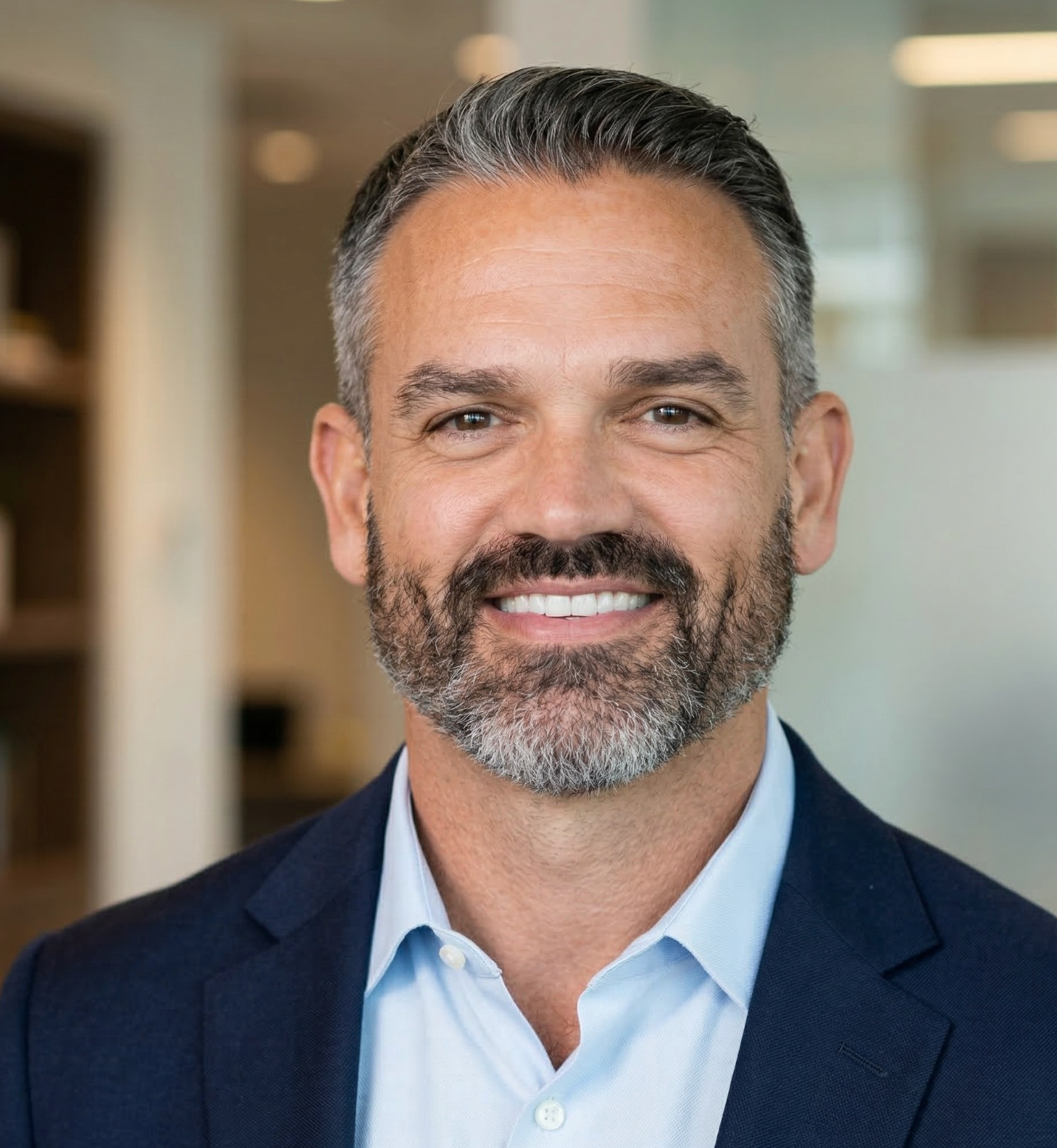
Vince Covino
Founder & Managing Partner, VC Strategic Capital